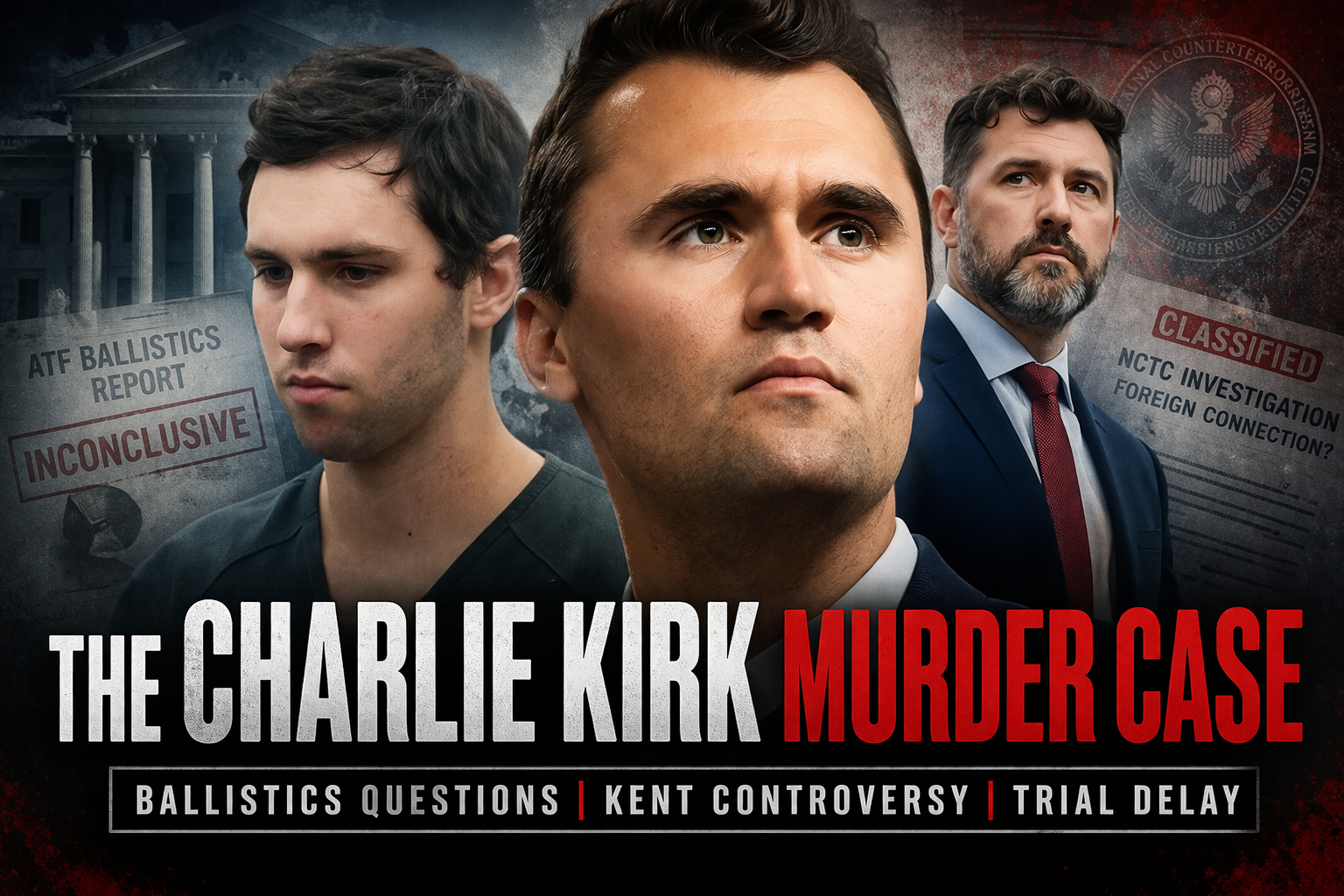
The Charlie Kirk Murder Case: Ballistics Ambiguity, Jurisdictional Noise, and the Risk of Narrative Drift
New developments in the murder case of Charlie Kirk have sparked widespread speculation — from an “inconclusive” ATF ballistics report to claims of a possible foreign connection raised by a former national security official. But a closer look at the legal record suggests the case against Tyler Robinson remains structurally intact. Here’s what the evidence actually shows — and what it doesn’t.
By Giovanni Losito
In any high-profile criminal prosecution, there is an almost gravitational pull toward sensational details — particularly when the evidence appears to introduce uncertainty. But courts do not operate on headlines. They operate on standards. Burdens. Chains of custody. And the slow, often misunderstood mechanics of due process.
Recent developments in the prosecution of Tyler Robinson — the defendant accused in the murder of political commentator Charlie Kirk — illustrate how easily partial facts can be misinterpreted once they leave the courtroom and enter the media ecosystem.
Two issues have recently drawn attention: an ATF ballistics report described as “inconclusive,” and claims from former National Counterterrorism Center official Joe Kent alleging the FBI suppressed an investigation into a potential foreign connection.
Both developments have generated outsized commentary. Neither, on close inspection, appears to fundamentally weaken the core structure of the prosecution’s case.
Calling balls and strikes requires separating evidentiary value from narrative noise.
The Ballistics Question: “Inconclusive” Is Not “Exculpatory”
According to a defense filing, an ATF forensic analysis could not conclusively match a bullet fragment recovered during autopsy to the rifle identified by investigators as the suspected murder weapon.
At first glance, this sounds significant. But the underlying forensic limitation matters.
The fragment reportedly struck bone, causing deformation and fragmentation — a scenario well known to reduce the ability of examiners to identify individual microscopic striation patterns typically used to match projectiles to barrels. In practical terms, there simply may not be enough intact material left to produce a definitive comparison.
“Inconclusive” in forensic science does not mean the item is excluded as a source. It means the available data does not permit a high-confidence identification.
That distinction is critical.
Where ballistics evidence becomes limited, prosecutors frequently rely on corroborating evidence — and here, according to filings and reporting summarized in the legal analysis video presented by Melba Pearson, the prosecution appears to possess multiple independent evidentiary links:
A shell casing recovered at the scene allegedly matched to the rifle
DNA evidence reportedly linking Robinson to the firearm
Written communications described as admissions
Surveillance footage placing the suspect in proximity to the crime
Individually, each piece carries its own evidentiary weight. Collectively, they form what prosecutors often describe as a “totality of evidence” framework.
Ballistics ambiguity may provide the defense with room to challenge certainty. It does not automatically dismantle the broader evidentiary structure.
Courts routinely instruct juries that no single piece of evidence must prove the entire case.
The Joe Kent Controversy: Jurisdiction Matters
The second development attracting attention involves Joe Kent, a former official connected to the National Counterterrorism Center, who resigned from his role and publicly asserted that the FBI halted his team’s inquiry into a possible foreign connection to the killing.
Such claims, particularly when they invoke intelligence agencies, predictably attract public intrigue.
But the legal posture is less dramatic than the rhetoric suggests.
According to analysis summarized in Pearson’s breakdown, Kent’s office did not possess primary investigative jurisdiction over a domestic homicide prosecution. Criminal investigations of this nature typically fall to local law enforcement with federal support where applicable — not intelligence entities operating outside the criminal investigative chain.
Jurisdiction is not a technicality. It is foundational to how evidence is gathered, preserved, and admitted.
Additionally, Kent is reportedly under investigation for alleged unauthorized disclosure of classified information — a circumstance that could significantly complicate any effort to introduce his testimony, depending on the nature of the inquiry and potential evidentiary challenges.
Credibility matters in court.
If the defense seeks to introduce Kent’s claims, prosecutors would likely scrutinize both the relevance and reliability of the testimony, particularly if it ventures beyond direct evidentiary knowledge into speculative assertions.
Courts routinely exclude testimony that lacks direct factual foundation or risks confusing jurors with conjecture.
Discovery Volume and Trial Timing
One of the most telling indicators of the case’s procedural posture is the volume of discovery material involved:
31 hours of audio evidence
more than 700 hours of video
approximately 6,100 pages of documents
In complex cases, discovery review is not a formality. It is a constitutional requirement.
The defense has requested a six-month delay to adequately review the material — a request courts frequently grant in order to avoid later appeals based on ineffective assistance of counsel.
Speed can be politically satisfying. But it can also produce reversible error.
The justice system, particularly in serious felony cases, is designed to prioritize procedural integrity over velocity.
The Broader Pattern: When Partial Facts Become Headlines
Public attention often gravitates toward the most ambiguous element in a case — especially when technical language such as “inconclusive” enters the reporting cycle.
But ambiguity in one area does not negate clarity in others.
Nor does the emergence of peripheral controversy automatically transform the evidentiary core of a prosecution.
At this stage, the available record suggests a process still unfolding within normal legal parameters:
evidence being tested
discovery being reviewed
arguments being sharpened
timelines being negotiated
This is what due process looks like in practice — often slower, less cinematic, and more methodical than public discourse tends to tolerate.
The ultimate strength of the case will be determined in court, not in fragments of filings or isolated interpretations of forensic terminology.
Until then, the most responsible posture is neither assumption of guilt nor presumption of collapse — but disciplined attention to evidence as it develops.
That is the work of accountability journalism.
And the standard the public deserves.
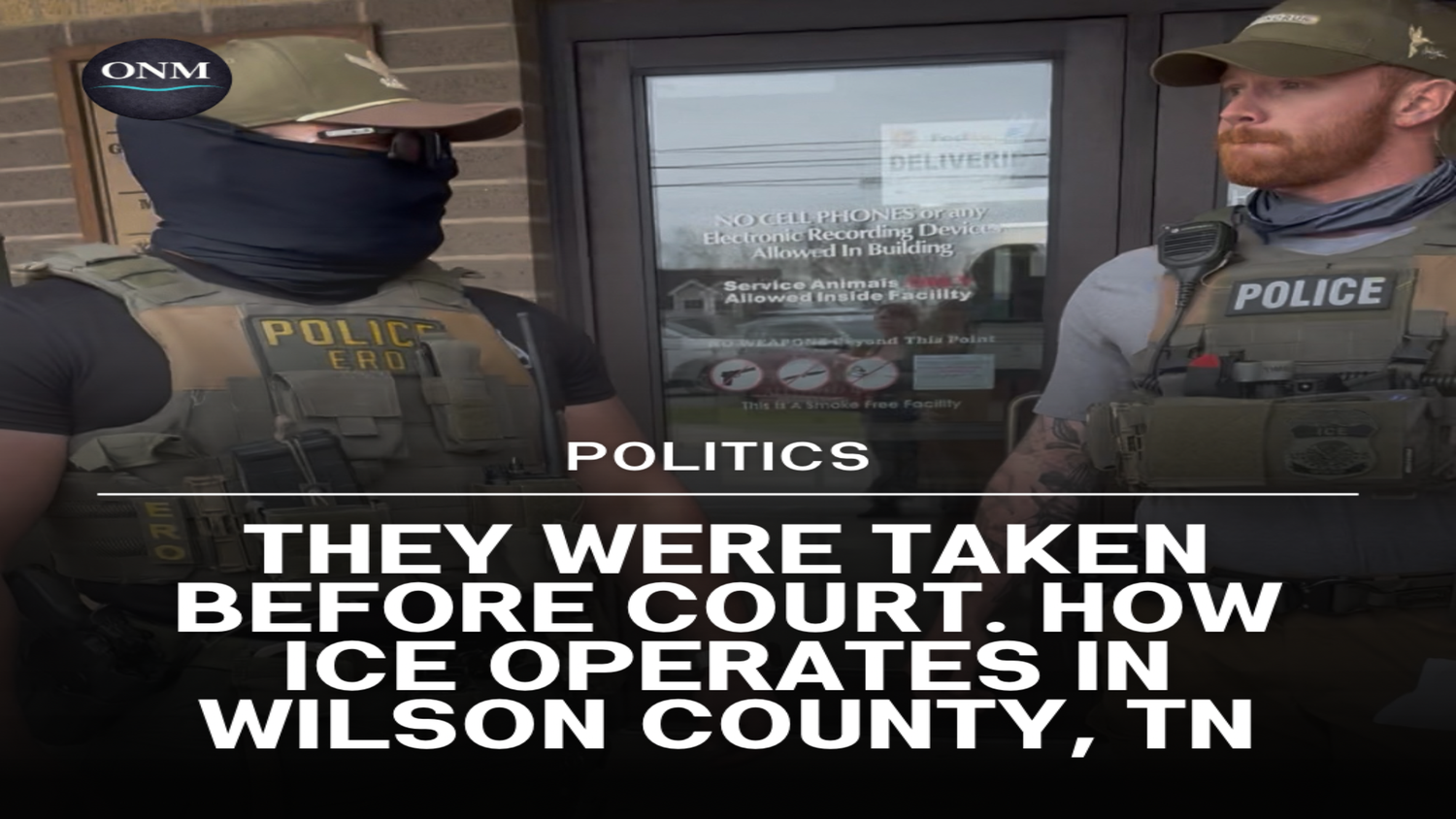
From Quiet County to Federal Target- ICE in Wilson County
Federal immigration enforcement has arrived in places once thought insulated from national policy debates. In Wilson County, Tennessee, the presence of ICE agents at the courthouse has sparked public confrontation, raised legal questions, and exposed uncertainty about who holds authority when federal operations intersect with local communities. As residents demand transparency and accountability, the divide between public concern and official response continues to widen.
In Wilson County, Tennessee, a place long seen as a quiet rural community removed from the
reach of federal policy, that sense of distance is beginning to disappear. Under the
administration of Donald Trump, immigration enforcement is no longer something happening in
faraway cities. It is now unfolding here at home. In recent weeks, agents with U.S. Immigration
and Customs Enforcement, commonly known as ICE, have been seen operating at the Wilson
County courthouse. Their presence appears to be focused on busy court days, when more
people are required to appear. This activity comes after the county sheriff confirmed that in
January, Wilson County entered into a 287(g) agreement with the U.S. Department of Homeland
Security. That agreement allows local law enforcement to work more closely with federal
immigration officials. The community response has been immediate. After the Department of
Homeland Security indicated it was considering purchasing property in the county, more than
one hundred residents showed up to a County Commission meeting to speak out. At the
February 13 meeting, speaker after speaker made it clear that they did not want an expanded
ICE presence in Wilson County.
By March 24, those concerns had turned into something more direct. Community members
reported that ICE agents were waiting outside the Wilson County Criminal Justice Center,
positioned near the main entrance. According to multiple accounts, agents watched for people
arriving for scheduled court appearances and detained some individuals before they were able
to enter the building. Community leaders also stated that at least two of those detained had
lawful work visas, raising concerns about who is being targeted and why. Video from the scene
shows residents confronting agents and demanding that they release the individuals being
detained. At times, agents stepped back to their vehicles but remained nearby, appearing to wait
for more people to arrive for court. Roughly thirty five minutes later, another incident unfolded. A
young man approached the courthouse for what was supposed to be his day in court. According
to an on site observer, two masked agents got out of an unmarked vehicle and moved quickly to
detain him. Witnesses said the agents did not clearly identify themselves before grabbing the
man and forcing him to the ground as he called out for help.
People nearby began shouting for the agents to stop and leave him alone. One woman could be
seen crying and pleading with them as the situation escalated. Deputies from the Wilson County
Sheriff’s Office were present during the incident and appeared to help secure the scene while
the arrest took place. Robert Bryan was also seen outside during the enforcement activity. At
one point, a resident approached him and demanded to know why he was not intervening,
questioning the department’s role in what was happening. The exchange reflected the growing
tension between local officials and members of the community. For many in Wilson County, the
events of March 24 marked a turning point. What once felt distant now feels immediate. Federal
immigration enforcement is no longer an abstract issue. It is happening at the courthouse steps,
in full view of the public.
In the aftermath of these events, we spoke with local leaders to better understand how officials
are responding. Geri Ashley said she was opposed to what she described as violent ICE
operations and emphasized that immigration laws can be enforced without putting people at risk
or creating fear in the community. She told us she plans to look into what actions, if any, the citycan take and that she intends to speak with the police chief to confirm whether local law
enforcement is working with ICE and to gather more information. We also attempted to speak
with Rick Bell, but were unable to secure time with him that day. A representative from his office
told us they were not aware of ICE activity in Lebanon or at the courthouse prior to our inquiry.
They said they would look into the situation and ensure the mayor was informed. When we
contacted the office of Randall Hutto, we were told that there was little the county mayor could
do directly and that questions about enforcement should be directed to the sheriff. Repeated
attempts to reach the Wilson County Sheriff’s Office for comment were unsuccessful. Calls went
unanswered, and on multiple attempts, we were unable to leave a voicemail after the line
disconnected. As of publication, the sheriff has not publicly responded to these incidents or to
concerns raised by members of the community.
What emerges is a picture of limited local accountability and unclear lines of authority. City
officials appear to be seeking answers but acknowledge there are limits to what they can do
without coordination from the state or county. At the county level, leadership has largely
deferred responsibility, pointing back to the sheriff’s office, which has yet to provide public
comment. This stands in contrast to the visible response from the community. Residents have
spoken out at public meetings, confronted agents in real time, and continue to demand clarity
about what is happening in their county. Many are not just asking for answers but calling for an
end to ICE presence altogether. The divide between residents and local leadership is becoming
more apparent. While county officials have previously stated opposition to the idea of an ICE
detention facility, that position has not translated into broader action on enforcement activity now
taking place. At the city level, officials took a more formal step during earlier discussions by
passing a resolution opposing the construction of an ICE facility in Lebanon. While largely
symbolic in terms of enforcement power, it represents a clearer public stance than what has
been seen at the county level.
As enforcement actions continue, many residents are left with the same question. If federal
immigration operations are happening in full view of the public, and local officials say their power
is limited, then who is accountable to the people of Wilson County?

Wyden Presses DEA After Records Show Epstein Was Target of a 2015 Drug-Trafficking Probe
It All Begins HereSen. Ron Wyden is demanding the DEA release its full investigative file on Jeffrey Epstein after new disclosures revealed Epstein was a target in a 2015 drug-trafficking probe. The files raise fresh questions about why federal agencies sat on major leads — and why entire categories of evidence never made it into the public narrative.
By Giovanni Losito
Sen. Ron Wyden is demanding that the Drug Enforcement Administration turn over the full record of a little-known 2015 investigation that listed Jeffrey Epstein and more than a dozen associates as targets in a case involving suspected drug-trafficking, illicit financial activity, and prostitution-linked transactions.
The push came after fragments of the DEA file surfaced in the federal government’s latest release of the Epstein files — a release lawmakers expected to bring clarity, not raise new questions about who knew what and why entire threads of evidence seem to have gone nowhere.
Wyden’s letter makes one thing plain: the DEA probe wasn’t a side note. It involved a major investigative unit, the kind typically assigned to large, organized trafficking networks and high-volume financial crimes. Yet the public record shows no charges, no prosecutorial memo, and no explanation for why a case of that size evaporated.
In his letter, Wyden asked for the basics federal agencies should have already provided:
an unredacted version of the internal memo identifying the targets;
the communications trail between DEA investigators and federal prosecutors;
a timeline showing who made what call and when;
and the legal basis for the redactions in the DOJ’s public release.
He also reminded the agency that the Epstein Files Transparency Act gives it very little room to hide anything.
A Separate Thread: The Informant Emails
While Wyden focuses on the DEA, another piece of the document dump has drawn attention — a string of emails from a man identified in the files as Ken Turner, an FBI informant who contacted an NYPD detective from Mexico.
The emails aren’t polished government memos. They read like raw field chatter from someone who thought he was passing along urgent information. In one, Turner wonders whether a leak from a sex-trafficking case in Mexico got a judge shot. “People’s lives are in jeopardy,” he wrote.
In another message — sent the day Epstein died — he tells investigators bluntly, “We don’t believe it was suicide,” saying that belief was based on leads developed in Mexico. The line stands out because it contradicts the tone of official statements at the time, and because the full context of the informant’s communication remains missing from the files.
Federal officials have continued to say Epstein died by suicide, but internal emails released under the transparency law show that even some investigators questioned whether his final note resembled anything close to a suicide message.
Letters to the CIA Add One More Blind Spot
Wyden isn’t the only lawmaker pressing for answers. Other members of Congress have sent letters — some public, some classified — to the CIA regarding intelligence-linked material that appears to be absent from the DOJ’s release.
Those letters hint at a specific concern: that information shared with, or generated by, the intelligence community was carved out of the public files altogether. Several redactions cite “foreign liaison sensitivity,” which suggests that foreign intelligence or cooperative investigations may sit behind the black lines.
If federal agencies withheld intelligence because of foreign partnerships, that may technically satisfy classification rules — but it undermines the purpose of the transparency act and the public’s ability to understand the full scope of Epstein’s network.
A Pattern That Keeps Repeating
With each new batch of documents, the same pattern shows up:
federal agencies knew more than they ever told the public, and pieces of those investigations were quietly dropped without public explanation.
Before the 2019 sex-trafficking charges, Epstein had already been the subject of:
a DEA investigation into suspected trafficking and illicit financial networks;
FBI interviews and internal communications that contradict public statements;
and intelligence-linked material that Congress now believes may have been withheld.
Wyden’s point is simple: if the DEA opened a major trafficking case, the public deserves to know why it died on the vine.
Why It Matters Now
The documents released so far — redacted, fragmented, and incomplete — make it clear that Epstein’s criminal activity didn’t fit neatly into one category. There were financial networks, international movements, possible drug-related transactions, and intelligence contacts that never made it into the government’s public narrative.
Wyden’s letter is one of the first serious attempts to force the DEA to account for its piece of the story. If the agency complies, it may finally reveal whether the 2015 investigation stalled because of bureaucracy, institutional caution, or something far more deliberate.

Trump Blamed Democrats for America’s Health Care Mess. The ACA Was a Republican Creation.
In his 2026 State of the Union, Donald Trump blamed Democrats for America’s health-care problems. But the Affordable Care Act did not begin on the left — it began inside conservative policy circles and was championed by Republican lawmakers long before Obama signed it into law.
By Calder Knox
During his 2026 State of the Union, Donald Trump blamed Democrats for the state of American health care. Rising costs. Market instability. Insurance confusion. According to him, it was all engineered by the left.
Strong lines. Easy applause.
But historically inaccurate.
Because before the Affordable Care Act became “Obamacare” in campaign ads, before it turned into a partisan dividing line, it was something else entirely:
It was a Republican idea.
Not loosely inspired. Not partially influenced.
Designed. Drafted. Promoted.
By conservatives.
The ACA Began at the Heritage Foundation
In 1989, the Heritage Foundation — one of the most influential conservative policy institutions in the country — published a proposal titled “Assuring Affordable Health Care for All Americans.”
Its defining feature? An individual mandate.
Heritage argued that Americans who could afford health insurance should be required to carry it, preventing them from shifting emergency care costs onto taxpayers and insured families. The idea was framed as personal responsibility — a conservative counterweight to single-payer proposals gaining traction at the time.
The plan also included:
Private insurance marketplaces
Standardized benefit packages
Financial assistance to help lower-income families purchase coverage
Those pillars later became central components of the Affordable Care Act.
This was not a Democratic blueprint. It was a conservative one.
Republicans Turned It Into Legislation
In 1993, during the Clinton health-care debate, Senate Republicans introduced the Health Equity and Access Reform Today Act, commonly known as the HEART Act.
The bill was sponsored by Republican Senator John Chafee and co-sponsored by nearly half of the Republican caucus, including Bob Dole, Orrin Hatch, Chuck Grassley, and Richard Lugar.
Its framework included:
An individual mandate
Insurance purchasing pools
Standardized private plans
Sliding-scale subsidies
Policy historians have documented the structural overlap between the HEART Act and what would later become the Affordable Care Act.
The difference wasn’t design.
It was timing — and who ultimately signed it.
Romneycare Proved the Model
In 2006, Massachusetts Governor Mitt Romney implemented the same framework at the state level.
The Massachusetts reform:
Required residents to carry health insurance
Created a regulated marketplace (“the Connector”)
Expanded Medicaid
Provided subsidies for middle-income families
Subsequent research found the state reached near-universal coverage — roughly 98% insured — without collapsing the private insurance market.
At the time, conservatives praised it as proof that market-based reform could work.
The architecture functioned exactly as intended.
Then Obama Signed It
When the financial crisis hit and millions lost employer-based coverage, the Obama administration looked for a reform model that:
Preserved private insurance
Expanded access
Used markets rather than government-run care
Had already been tested
They chose the conservative framework.
Not single-payer.
Not nationalized health care.
A Republican design.
And that’s when the politics changed.
The individual mandate — once described by conservatives as a matter of personal responsibility — was suddenly branded as tyranny.
Marketplaces became “government takeover.”
Subsidies became “handouts.”
The policy hadn’t moved. The party had.
What Trump Claimed — And What He Omitted
In his 2026 State of the Union, Trump criticized the Affordable Care Act as a Democratic failure and promoted his own “Great Healthcare Plan,” promising to send money “directly to the people” rather than insurers.
Fact-checking reports noted that his claims about prescription drug prices were overstated and that overall drug costs in the United States remain high. They also observed that details surrounding his proposed replacement plan remain sparse.
What Trump did not mention:
The ACA’s core architecture originated in conservative policy circles.
Republican senators authored legislation mirroring the ACA nearly two decades before its passage.
A Republican governor successfully implemented the same framework at the state level.
Subsequent Republican efforts weakened portions of the law, including eliminating the federal mandate penalty.
Blaming Democrats for flaws in a system that Republican policymakers helped design requires selective memory.
Accountability Starts With the Record
The Affordable Care Act is not flawless. Premiums remain high for many families. Deductibles strain household budgets. The system remains complex and uneven.
But the law’s DNA is conservative.
Heritage Foundation.
Republican Senate legislation.
Romneycare.
Those fingerprints do not disappear because they are politically inconvenient.
If national leaders want to reform American health care honestly, the starting point cannot be rewriting how the system came to exist.
The record is clear.

After the Gonzales Scandal: A Gender Divide Inside the GOP Moves Into the Open
The fallout from the Tony Gonzales scandal has exposed a widening divide inside the House Republican conference, as GOP women publicly break with Speaker Mike Johnson over calls for resignation.
⚠️ Trigger Warning
This report contains discussions of abuse of power, harassment, and suicide.
If you are struggling, help is available:
U.S.: Call or text 988 or chat at 988lifeline.org
Canada: Call or text 988 or visit TalkSuicide.ca
U.K./Ireland: Call 116 123 (Samaritans)
Europe: Many countries maintain 116-123 lines through national health services
Please take care while reading.
By Giovanni Losito
OndaNova Media | Public Accountability
The publication of text messages between Rep. Tony Gonzales and his former staffer did more than trigger a political controversy. It exposed a widening fracture inside the House Republican conference — one that has been building quietly for more than a year.
At issue are screenshots showing Gonzales, a married Texas Republican, repeatedly steering late-night conversations with his then–regional district director, Regina Santos-Aviles, toward sexual territory in 2024. In one exchange, Santos-Aviles responded, “This is going too far, boss,” attempting to reestablish professional boundaries.
In September 2025, Santos-Aviles died after setting herself on fire outside her Uvalde home. Local authorities ruled her death a suicide.
The Office of Congressional Conduct completed its review of the matter but, under House rules, cannot transmit its findings to the Ethics Committee within 60 days of an election. The report is expected to be formally referred after the March 3 primary.
That procedural reality now sits at the center of an institutional test.
Johnson Urges Patience
House Speaker Mike Johnson has taken a measured approach.
Speaking to reporters on Capitol Hill, Johnson said he does not believe “it’s time to call for resignation,” adding that members should “allow investigations to play out.”
Johnson also noted that he endorsed Gonzales prior to the full scope of the controversy becoming public and has not withdrawn that endorsement.
The Speaker’s posture reflects the political math confronting him. The House majority remains narrow, particularly after Rep. Marjorie Taylor Greene announced her resignation effective January 2026. Any additional vacancy or primary upset could complicate leadership stability.
But for some within his conference, particularly Republican women, patience reads differently.
GOP Women Break With Leadership
Several high-profile Republican women have publicly called on Gonzales to step aside.
Rep. Lauren Boebert wrote on X, “@RepTonyGonzales, RESIGN!”
Rep. Nancy Mace described the allegations as “deeply disturbing,” characterizing the messages as an abuse of power and stating that resignation would be appropriate.
Rep. Anna Paulina Luna said the conduct brought “dishonor on the House” and argued that the Texas delegation should have issued clear condemnation.
Texas Rep. Brandon Gill similarly stated that “America deserves better” and urged Gonzales to drop out of his primary race.
Even Gonzales’ primary challenger, Brandon Herrera, publicly called for his resignation.
The criticism is notable not simply because it comes from Republicans, but because it comes from some of the party’s most Trump-aligned members — lawmakers who have historically closed ranks during controversies involving their own conference.
Greene’s Broader Warning
Rep. Marjorie Taylor Greene, who announced she will resign from Congress in January 2026, also weighed in on the situation, describing the revelations as “shocking and disgusting” in remarks reported by multiple outlets.
Greene has previously spoken about what she views as dismissive treatment of Republican women within the conference. In a 2025 interview, she said women in her party were “sick and tired of the way men treat Republican women,” arguing that female lawmakers are often marginalized internally.
Whether one agrees with Greene’s broader rhetoric, the Gonzales episode now intersects with a pattern several GOP women have publicly identified: frustration with leadership culture, responsiveness, and internal accountability.
A Leadership Pattern Under Scrutiny
Over the past year, tensions between certain Republican women and Speaker Johnson’s leadership team have surfaced repeatedly.
Rep. Luna bypassed leadership with a discharge petition on stock-trading reform.
Rep. Mace has publicly criticized the slow pace of internal reforms.
Rep. Elise Stefanik has questioned whether Johnson would retain sufficient votes in a hypothetical future Speaker election.
All of those disputes centered on legislative priorities and procedural control. The Gonzales scandal adds a different dimension — workplace conduct and power imbalance.
The divide is no longer procedural. It is cultural.
What Happens Next
The Ethics Committee will receive the OCC report after the March 3 primary. Gonzales has denied wrongdoing and characterized the timing of the disclosures as politically motivated.
Leadership has signaled that formal conclusions should await the investigative process.
Critics argue that the text messages themselves warrant immediate accountability.
The coming weeks will determine whether this episode becomes another internal controversy absorbed by institutional delay — or a moment that forces a clearer standard for conduct within the House.
Remembering Regina
Beyond the political calculus is a human reality.
Regina Santos-Aviles was a mother, a staff professional, and a member of the Uvalde community. The public record now contains text exchanges that suggest blurred professional boundaries between a lawmaker and his subordinate.
Regardless of political alignment, the central question remains whether congressional workplaces adequately protect staff from coercion, retaliation, or power imbalances.
That question does not expire with a primary election.
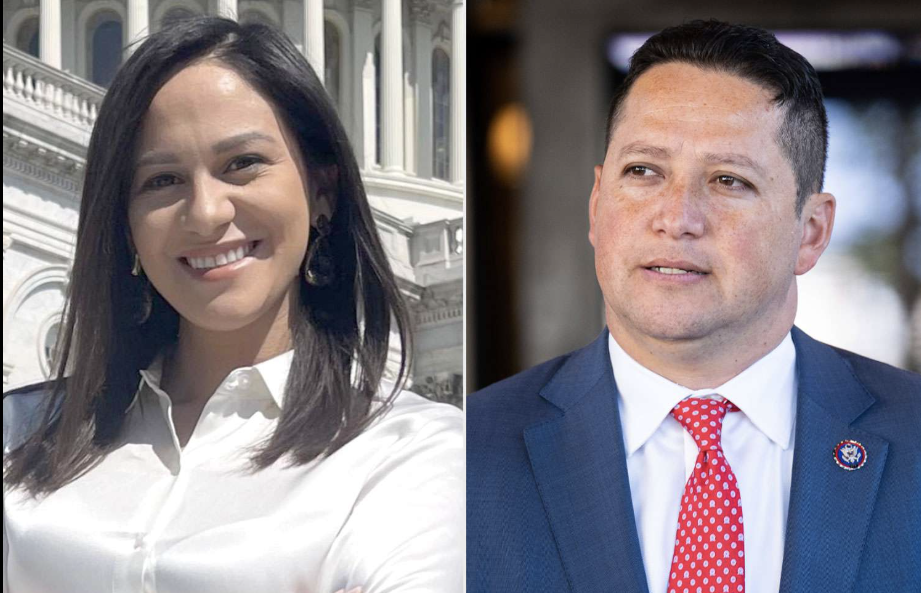
Pressure, Silence, and a Backyard Fire:
Text messages. A collapsed marriage. A district office turned silent.
A documented timeline reconstructs the events leading to the tragic death of congressional aide Regina Santos-Aviles — and the ethics questions now facing Rep. Tony Gonzales.
⚠️ Trigger Warning: Suicide & Crisis Support
This article addresses themes of suicide, emotional distress, and abuse of power.
If you or someone you know is struggling, please reach out for help:
Reconstructing the Timeline Surrounding Rep. Tony Gonzales and the Death of His Aide
In September 2025, first responders found 35-year-old congressional aide Regina Santos-Aviles severely burned in her Uvalde backyard. She died the next morning in a San Antonio hospital. Two months later, the Bexar County Medical Examiner ruled her death a suicide by self-immolation.
What began as a quiet local tragedy has since widened into a serious ethics and power-abuse scandal. Text messages, interviews with former staff, and statements from Santos-Aviles’ widower outline a troubling sequence: a married congressman pursuing a subordinate; flirtation turning into pressure; a marriage collapsing; and an aide who, according to those closest to her, became isolated, destabilized, and cut adrift by the very office she served.
Rep. Tony Gonzales has issued repeated denials, calling the allegations “untruthful,” “smears,” and politically motivated. But the documented timeline tells its own story — one centered not on partisanship, but on power, silence, and the profound human fallout that followed.
Who She Was
Before any headlines, Santos-Aviles was a respected district director — a behind-the-scenes local problem-solver working on rural water projects, school safety, veterans’ concerns, grant assistance, and constituent outreach.
She was also a wife and a mother. She and her husband, Adrian Aviles, had been together more than 20 years and shared an eight-year-old son.
This is not a story about caricatures. It’s a story about real people who weren’t built for the spotlight but were pulled into it by choices they didn’t fully control.
Spring 2024 — The Messages Begin
Text messages provided to ABC News show the earliest shift in the relationship.
In May 2024, Gonzales — a married father of six — repeatedly asks Santos-Aviles for “sexy” photos, telling her he’s “a visual person” and pressing after she resists.
She replies at one point: “This is going too far boss.”
Her discomfort appears clear. His persistence appears clearer.
The power dynamic is the quiet center of gravity in all of this: a U.S. congressman and a subordinate navigating a space that was unprofessional at best, coercive at worst.
May–June 2024 — Discovery and Divorce
On May 31, 2024, her husband found the messages.
He says the messages were “very sexual in nature,” and that once he confronted the group chat shared by Gonzales and staff, he announced he was filing for divorce because his wife and her boss were having an affair.
Accounts differ slightly on the duration, but former staff have described the relationship as an “open secret” and noted the pair sometimes disappeared for extended periods during the 2024 election cycle.
The marriage did not survive the fallout. Counseling was attempted, but the couple separated within months.
After the Affair Surfaces — Isolation and a Job in Jeopardy
According to former staff and statements from the widower, the office culture shifted sharply once the affair became known.
A former staffer described Santos-Aviles as becoming “black-sheeped” — communications cut off, pressure to resign, and an unofficial month-long leave from the office.
Her husband says he watched her deteriorate emotionally over this period — deeply depressed, frightened for her job, and carrying shame she couldn’t shake. A month before her death, he says she threatened suicide; police found “nothing of concern.”
Gonzales denies the office retaliated against her and insists the entire story is fabricated by political rivals.
But the depression reported by her family, the workplace distancing described by staff, and the silence that followed are consistent in nearly every account.
September 13–14, 2025 — A Fire in the Backyard
On the night of September 13, neighbors saw flames rising behind her home. Santos-Aviles was found with catastrophic burns. She was airlifted to San Antonio, where she died hours later.
Her mother later said those final moments were filled with fear and pleading:
“I don’t want to die.”
For weeks her family believed the incident was accidental. The medical examiner’s ruling changed that: suicide by self-immolation.
Uvalde officials have withheld 911 recordings and investigative footage at the family’s request due to graphic content.
This was a woman overwhelmed, isolated, and — by multiple accounts — abandoned at the moment she needed support the most.
The Ethics Fallout
In early 2026, the San Antonio Express-News, People, ABC News, and the Houston Chronicle published corroborating accounts from former staff, the widower, and text messages.
Among them:
Gonzales repeatedly asking for sexualized photos
Santos-Aviles pushing back: “This is too far boss”
A text from her own number, sent by her husband, announcing the divorce
A coworker recalling her confession: “I had an affair with our boss, and I’m fine. You will be fine.”
Allegations that she became isolated and pressured out of her role
ABC News has reported that the Office of Congressional Conduct completed an investigation into Gonzales months ago. Under House rules, its findings cannot be transmitted to the Ethics Committee until after the primary.
Some GOP colleagues have called for his resignation. House leadership has not.
Gonzales continues to deny all wrongdoing, including claiming he is the victim of attempted “blackmail.”
The Human Truth
Strip away the politics and what remains is painfully simple:
A woman was pulled into an inappropriate relationship.
Her marriage collapsed.
Her workplace became a source of fear instead of support.
She spiraled — and died in one of the most agonizing ways a person can.
We cannot say any single factor “caused” her death. Suicide is always a collision of multiple forces. But the documented record makes one truth unavoidable: This was a misuse of power that left someone emotionally exposed, professionally isolated, and profoundly alone.
When power disparities go unaddressed inside congressional offices, the damage is rarely public at first. It is personal. Quiet. Career-altering. Whether the Ethics Committee ultimately finds wrongdoing or not, the underlying question remains: what safeguards exist for staffers when the person holding their livelihood also holds elected authority?
In the end, an eight-year-old boy lost his mother. That is the part no investigation, no denial, and no political statement will ever make right.
If You or Someone You Know Is Struggling
United States: Call or text 988 for the Suicide & Crisis Lifeline (24/7).
Canada: Call 1-833-456-4566 or text 45645.
United Kingdom & Ireland: Call Samaritans at 116 123.
Europe (EU): Find local helplines at https://www.iasp.info/crisis-centres-helplines/
Mexico: Call 800-273-8255 (Línea de la Vida).
You’re not alone. Free, confidential help is available everywhere.

Questions Surround FBI Director’s Italy Trip as Major Cases Remain Unresolved
Public leadership carries an unavoidable burden: presence is part of the job.
Recent reports and widely circulated footage showing FBI Director Kash Patel in Italy have generated scrutiny not because of travel itself, but because of timing. When high-profile investigations remain unresolved, perception becomes inseparable from performance.
The issue is not geography. It is governance.
By Giovanni Losito
WASHINGTON — Public leadership carries an unavoidable burden: presence is part of the job.
Recent reports and widely circulated footage showing FBI Director Kash Patel in Italy have generated scrutiny not solely because of travel itself, but because of timing. A spokesperson for the Bureau stated that the Director “was not in Italy for the Olympics,” yet the absence of a detailed public explanation regarding the trip’s scope has allowed questions to linger.
The issue is not geography. It is governance.
At the time of Patel’s travel, several nationally followed matters remained unresolved: the disappearance of Nancy Guthrie, and ongoing public calls for transparency related to materials associated with Jeffrey Epstein. Each case carries public consequence. Each requires visible institutional steadiness.
When senior leadership appears distant during periods of heightened public concern, perception becomes inseparable from performance.
Communication and Institutional Clarity
In federal law enforcement, clarity functions as a stabilizing force. Brief public responses, particularly when paired with viral online footage, can create interpretive gaps. Those gaps are rarely filled by patience.
Federal agencies serve constitutional order, not political cycles. When explanations appear incomplete, even if operationally justified, public confidence can erode. Not because criticism is loud, but because ambiguity invites speculation.
Transparency does not weaken institutions. It reinforces them.
Context Beyond a Single Trip
The FBI operates within a broader national security framework. Ongoing global tensions, shifting military posture in the Middle East, and domestic volatility create an environment in which visible executive focus carries symbolic weight.
Leadership at that level is not confined to operational decisions. It also includes signaling steadiness, discipline, and prioritization.
Americans can tolerate disagreement. What unsettles them is uncertainty surrounding accountability.
Institutional Stakes
This moment should not be reduced to personality or partisanship. It presents a structural question: What standard of transparency and presence should the public expect from those entrusted with federal investigative authority?
If the travel was appropriate and operationally necessary, a fuller explanation would likely resolve the controversy quickly.
If communication missteps occurred, acknowledgment would strengthen rather than diminish the institution.
The durability of federal law enforcement authority rests not merely on statutory power, but on public confidence. Confidence is preserved through documentation, consistent presence, and disciplined communication.
Institutional legitimacy is cumulative. It is built in moments of scrutiny as much as in moments of success.