
About Beyond the Bench
Beyond the Bench is a laboratory-informed examination of healthcare systems, public health infrastructure, and the policies that shape them.
Written by a practicing Medical Laboratory Technician, this platform explores what diagnostic data reveals about institutional blind spots, regulatory failures, and systemic inequities. In the lab, patterns emerge long before headlines do. Trends surface before official narratives shift. Injuries repeat before oversight responds.
This publication bridges laboratory science and civic responsibility — analyzing how evidence is interpreted, ignored, or politicized, and what that means for patients and communities.
Beyond the Bench connects diagnostics to accountability — examining how systems respond to evidence, and who is protected when they don’t.
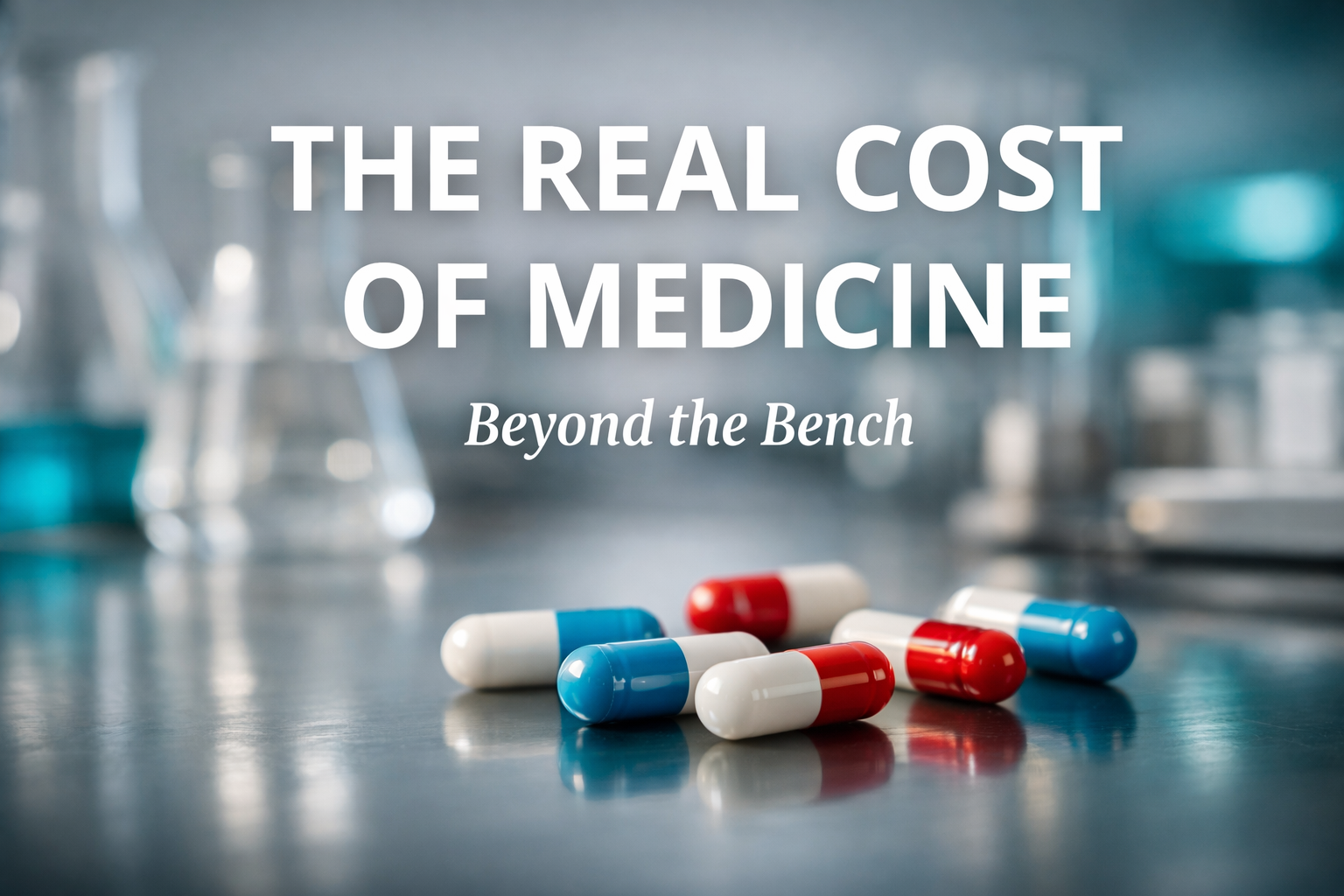
When the Conversation Leaves the Lab A Presidential Visit to a Cincinnati Pharmaceutical Facility Raises Bigger Questions About Drug Costs
A presidential visit to a pharmaceutical facility in Cincinnati was expected to highlight solutions for high drug prices. But early data shows TrumpRx may have limited impact for most patients. Inside the labs where medicines are developed, the bigger question remains: why does the U.S. still struggle to control the cost of prescription drugs?
By Mae | Beyond the Bench — OndaNova Media
When the presidential motorcade arrived at Thermo Fisher Scientific in Reading, Ohio, the symbolism was difficult to ignore.
Inside facilities like this, scientists and engineers work on the technical foundations of modern medicine — designing drug formulations, ensuring stability, and scaling production so that therapies can safely reach millions of patients.
The Cincinnati site specializes in oral solid-dose drug development — the science behind pills and capsules that must dissolve, release medication correctly, and behave consistently across millions of doses.
It is careful, methodical work.
And it represents one of the least visible but most essential parts of healthcare.
The visit was expected to highlight the administration’s effort to lower prescription drug costs through its new platform, TrumpRx. Instead, as the event unfolded, the conversation extended beyond medicine into geopolitical conflict, energy markets, and midterm elections.
That shift highlights a recurring tension in American healthcare policy:
We often talk about drug prices politically — but rarely structurally.
The Real Drivers of Drug Prices
The United States consistently pays more for prescription medications than other developed countries. Drug pricing in America is shaped by a layered system that includes:
• pharmaceutical manufacturers setting launch prices
• patent protections limiting competition
• insurance negotiations
• pharmacy benefit managers (PBMs)
• federal regulatory policy.
By the time a medication reaches the pharmacy counter, the price reflects far more than chemistry.
It reflects policy decisions made over decades.
Facilities like Thermo Fisher exist on the scientific side of the equation — where researchers solve formulation problems, scale production, and meet regulatory standards required for FDA approval.
Science produces the medicine.
Systems determine whether patients can afford it.
TrumpRx: The Promise vs Early Reality
The Trump administration introduced TrumpRx in February 2026 as a federal website designed to help Americans access lower prescription drug prices by purchasing certain medications directly from manufacturers.
The platform currently lists roughly 40–43 medications, primarily brand-name drugs offered through partnerships with companies such as Pfizer, Novo Nordisk, and AstraZeneca.
The policy is based on a “most favored nation” pricing model intended to bring U.S. prices closer to those paid in other developed countries.
Early evidence suggests the impact is mixed.
Polling shows about 35% of adults taking prescription medications have heard of TrumpRx, but only about 7% report visiting the site to compare prices so far.
Experts note that the limited number of drugs available on the platform means most prescriptions are not affected.
Some of the largest savings appear in niche categories, including weight-loss medications and fertility drugs, which are often not covered by insurance plans.
For insured patients, copays through insurance may still be lower than TrumpRx pricing in many cases.
For uninsured patients, however, the program may provide another pathway to price transparency and discounts.
Still, analysts note that similar discount mechanisms have long existed through manufacturer programs and third-party platforms.
This suggests TrumpRx may function more as an additional pricing tool rather than a comprehensive solution to high drug costs.
The Larger Policy Debate: Where Medicines Are Made
The Thermo Fisher visit also reflects a broader policy concern that has been building for years: where the United States manufactures its medicines.
Much of the global supply chain for active pharmaceutical ingredients operates outside the United States. Policymakers increasingly view domestic drug manufacturing capacity as both an economic and national-security priority.
Facilities like the one in Cincinnati represent part of the infrastructure needed to produce medicines domestically — an issue that has drawn bipartisan attention.
Pharmaceutical manufacturing policy now intersects with:
• supply chain resilience
• emergency preparedness
• economic development
• healthcare affordability.
The Missed Opportunity
Standing inside a pharmaceutical manufacturing facility offers a rare chance to talk about how medicines are actually made — and why they cost what they do.
It is an opportunity to discuss:
how research translates into therapy
how patents shape pricing
how supply chains affect availability
how policy influences affordability.
But those conversations require nuance.
They rarely fit neatly into campaign messaging.
Drug affordability affects nearly every American household.
Patients ration insulin. Seniors split pills. Families weigh medical costs against basic living expenses.
Inside laboratories like Thermo Fisher, scientists continue working on new therapies that may shape the future of medicine.
The question remains whether policy conversations will remain focused on the patients those therapies are meant to serve.
Because until the structure of drug pricing remains central to the national conversation, affordability will remain an unresolved challenge.
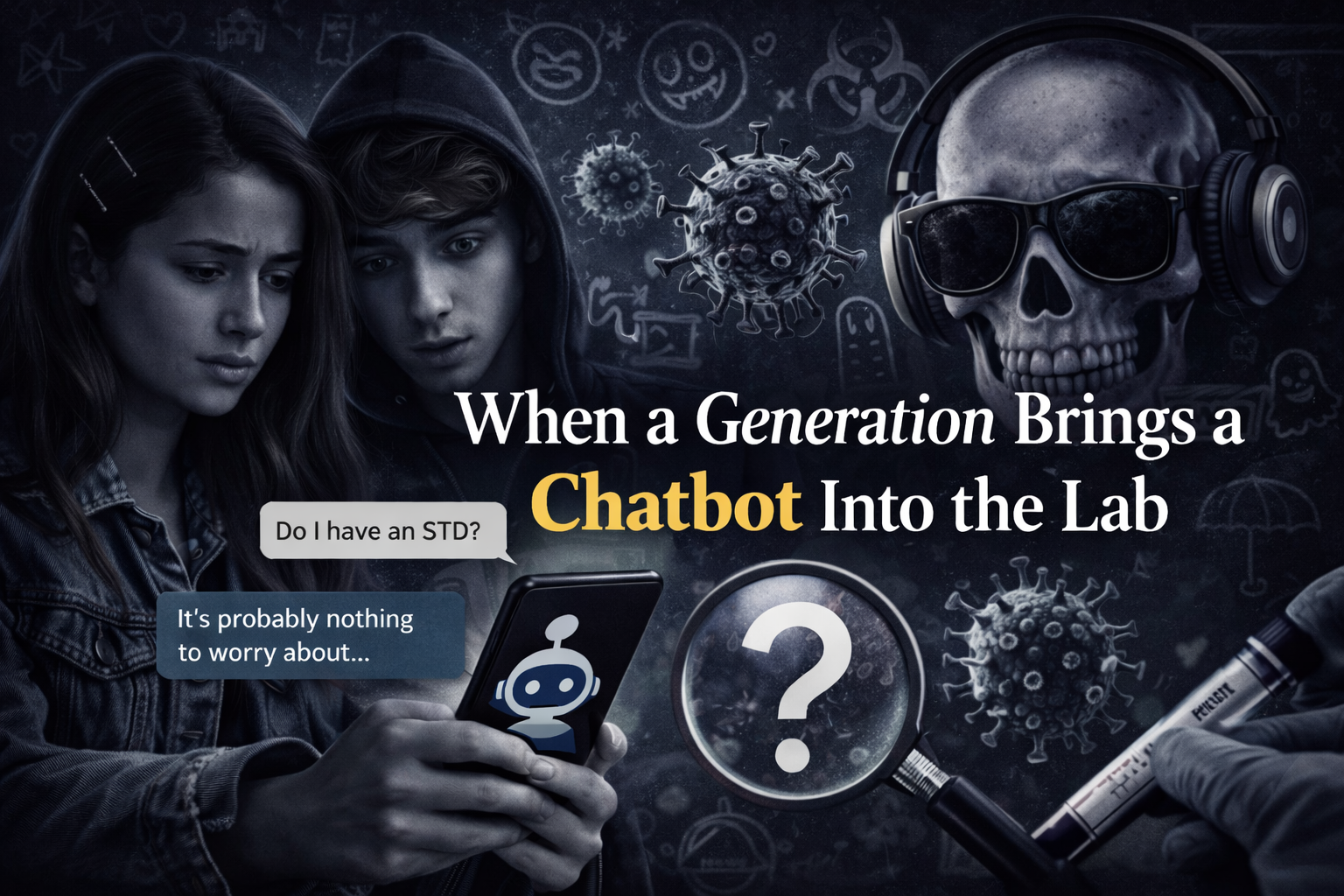
When a Generation Brings a Chatbot Into the Lab
For more than two decades, I’ve worked in clinical laboratory science — most of that time in microbiology. I don’t experience public health through headlines. I experience it through specimens, test results, and timelines.
I’ve signed off on positive chlamydia screens from teenagers who were convinced it was “just irritation.” I’ve seen gonorrhea results in patients who delayed testing because something online told them it probably wasn’t serious. I’ve watched syphilis reappear in communities that once believed it was under control.
So when I read that 20% of Gen Z adults have asked an AI chatbot about STIs — and that many were seeking a diagnosis — I wasn’t surprised. What gave me pause was that when those responses were compared to confirmed lab results, they were wrong nearly one-third of the time.
In microbiology, a 31% miss rate is not a minor flaw. It’s a risk.
By Mae Losito, MLT(ASCP), Microbiology
21 Years in Clinical Laboratory Science
For more than two decades, I’ve worked in clinical laboratory science — most of that time in microbiology.
I don’t experience public health through headlines. I experience it through specimens, test results, and timelines.
I’ve signed off on positive chlamydia screens from teenagers who were convinced it was “just irritation.” I’ve seen gonorrhea results in patients who delayed testing because something online told them it probably wasn’t serious. I’ve watched syphilis reappear in communities that thought it was a relic of the past.
So when I read that 20% of Gen Z adults have asked an AI chatbot about STIs — and that many were seeking an actual diagnosis — I wasn’t shocked.
What gave me pause was this: when those chatbot responses were compared to confirmed lab results, they were wrong nearly one-third of the time.
In microbiology, a 31% miss rate isn’t a harmless error.
It’s a system failure.
The Bench Doesn’t Guess
Sexually transmitted infections are clinically deceptive. Many produce no symptoms at all. Others look like common, less serious conditions — yeast infections, urinary tract infections, bacterial vaginosis, dermatitis, even normal physiologic variation.
A chatbot can analyze patterns. It can generate probabilities.
But in the laboratory, we don’t operate on probability alone.
We detect.
We run nucleic acid amplification tests (NAATs) to identify the genetic material of specific organisms. We confirm findings. We examine microscopy when indicated. We culture when necessary. Increasingly, we track antimicrobial resistance trends because treatment is no longer as simple as it once was.
Diagnosis requires evidence — an organism, its DNA, or a measurable response.
An algorithm cannot evaluate a specimen. It cannot measure bacterial load. It cannot detect co-infection. It cannot determine resistance patterns that are quietly evolving across regions.
And those details matter.
What I’ve Observed as Gen Z Came of Age
As Gen Z moved into late adolescence and early adulthood, I did notice a shift — but not the one critics like to assume.
It wasn’t recklessness.
It was hesitation.
More delayed testing.
More anxiety-driven testing.
More self-diagnosis before clinical evaluation.
More uncertainty about what symptoms actually mean.
There’s a visible gap in baseline sexual health knowledge that didn’t feel as pronounced 15 or 20 years ago.
National surveillance data consistently show that adolescents and young adults account for nearly half of reported chlamydia, gonorrhea, and syphilis cases in the United States. That statistic is often framed as a moral failing.
It isn’t.
It’s structural.
Over the years, comprehensive sex education has become inconsistent across states and districts. Curriculum battles have replaced clarity. At the same time, teens are living in a digital ecosystem where nearly half report being online “almost constantly.”
When reliable instruction contracts and screen time expands, information doesn’t disappear.
It relocates.
Right now, it’s relocating to AI.
The Risk of “It’s Probably Fine”
In microbiology, timing is everything.
Untreated chlamydia can progress to pelvic inflammatory disease.
Untreated gonorrhea can disseminate beyond the initial site of infection.
Syphilis can advance quietly through stages before symptoms become unmistakable.
Delay increases transmission risk. Delay increases complications.
What concerns me most about chatbot-based reassurance isn’t the technology itself — it’s the behavioral ripple effect.
If someone receives false reassurance, they wait.
If someone receives an inaccurate alarm, they panic.
In both scenarios, decisions are made without laboratory confirmation.
A chatbot is not CLIA-certified. It is not regulated as a diagnostic instrument. It does not carry clinical liability.
But patients carry the consequences.
This Isn’t About “Kids These Days”
Gen Z is not apathetic. In my experience, they’re thoughtful and cautious — sometimes to a fault. They care about privacy. They worry about cost. They worry about stigma. They don’t always feel safe asking parents, and they don’t always feel certain about accessing care.
When a 19-year-old tells me they “asked AI first,” I don’t hear irresponsibility.
I hear that the human system felt harder to approach than a screen.
That should concern us more than the technology itself.
Where Policy Inevitably Intersects
As a medical laboratory scientist, my role is detection, not legislation.
But after 21 years in this field, pattern recognition becomes second nature.
When medically accurate sexual health education declines, laboratory-confirmed infections do not vanish.
When confidential testing becomes harder to access, delayed diagnoses increase.
When curriculum is reshaped by ideology rather than evidence, the downstream impact eventually reaches the bench.
That observation isn’t partisan.
It’s empirical.
A Generation Deserves More Than a Guess
Artificial intelligence can be useful for general education. It can explain terminology. It can outline possibilities.
It cannot diagnose you.
If you have symptoms — or even if you believe you were exposed without symptoms — testing remains the only definitive path forward.
Not reassurance.
Not speculation.
Not probability.
Evidence.
For 21 years, I’ve trusted the bench more than assumptions. The bench does not shame. It does not moralize. It does not speculate.
It detects.
If we want better outcomes for Gen Z — and for every generation after — we need to restore three foundational pieces:
Medically accurate, evidence-based education
Accessible, confidential testing
Clinical environments that feel safe and stigma-free
Because when a generation turns to an algorithm for diagnosis, that isn’t primarily a technology story.
It’s a trust story.
And trust, once lost, is much harder to culture than bacteria.
— Mae
About the Author
Mae Losito is a Medical Laboratory Scientist specializing in microbiology with 21 years of clinical laboratory experience. Her work focuses on diagnostic integrity, laboratory medicine, and public health education.